

What Can Crystal Size Tell Us About Where An Igneous Rock Formed?
Igneous Rocks
Igneous Rocks
Igneous rocks are one of three master types of rocks (along with sedimentary and metamorphic), and they include both intrusive and extrusive rocks.
Subjects
Globe Science, Geology
Epitome
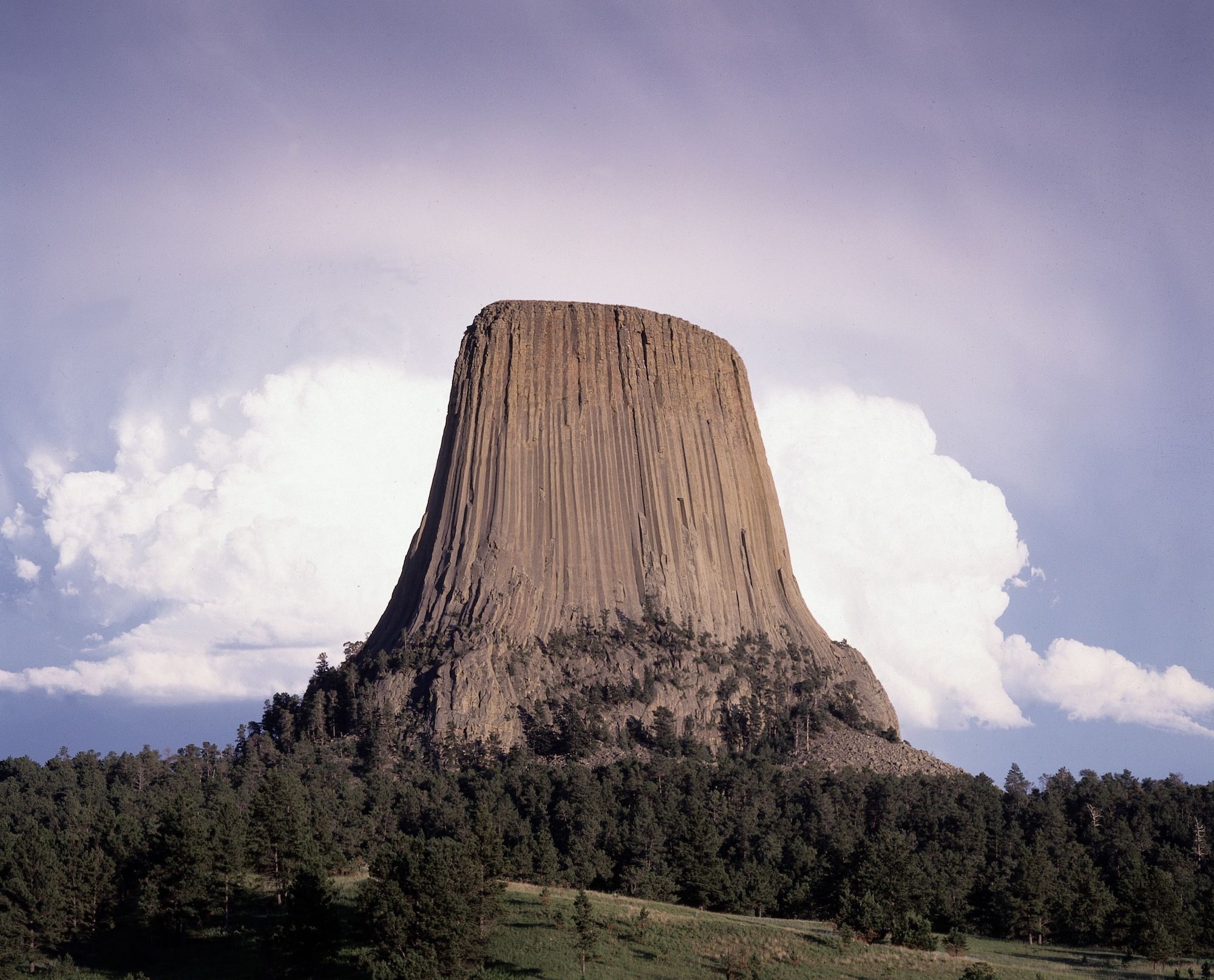
Devils Tower Rock
Devil's Tower National Monument in Wyoming is an example of an igneous rock.
Photograph by Koumlhn/ullstein bild courtesy of Getty Images
Igneous rocks form when magma (molten stone) cools and crystallizes, either at volcanoes on the surface of the Earth or while the melted stone is yet inside the chaff. All magma develops hush-hush, in the lower crust or upper pall, because of the intense heat in that location. Igneous rocks can accept many different compositions, depending on the magma they cool from. They can also wait different based on their cooling conditions. For instance, two rocks from identical magma tin become either rhyolite or granite, depending on whether they cool quickly or slowly. The two main categories of igneous rocks are extrusive and intrusive. Extrusive rocks are formed on the surface of the Earth from lava, which is magma that has emerged from underground. Intrusive rocks are formed from magma that cools and solidifies within the chaff of the planet. When lava comes out of a volcano and solidifies into extrusive igneous rock, also called volcanic, the rock cools very chop-chop. Crystals within solid volcanic rocks are small because they do not take much time to class until the rock cools all the way, which stops the crystal growth. These fine-grained rocks are known every bit aphanitic—from a Greek give-and-take meaning "invisible." They are given this proper name because the crystals that grade inside them are and so small that they can be seen but with a microscope. If lava cools nearly instantly, the rocks that form are glassy with no individual crystals, like obsidian. In that location are many other kinds of extrusive igneous rocks. For instance, Pele'southward hair is long, extremely thin strands of volcanic glass, while pahoehoe is smooth lava that forms shiny, rounded piles. Intrusive rocks, also called plutonic rocks, cool slowly without ever reaching the surface. They have big crystals that are usually visible without a microscope. This surface is known as a phaneritic texture. Perhaps the best-known phaneritic rock is granite. One extreme blazon of phaneritic rock is called pegmatite, found oft in the U.S. country of Maine. Pegmatite can take a huge multifariousness of crystal shapes and sizes, including some larger than a man mitt.

Devil's Tower National Monument in Wyoming is an instance of an igneous rock.
Photo by Koumlhn/ullstein bild courtesy of Getty Images
aphanitic
Describing word
Stone texture with crystals that are invisible without magnification.
basalt
Noun
type of dark volcanic rock.
granite
Noun
type of difficult, igneous rock.
lava
Substantive
molten rock, or magma, that erupts from volcanoes or fissures in the World'south surface.
Noun
molten, or partially melted, rock below the Globe'due south surface.
Substantive
eye layer of the World, made of more often than not solid rock.
pahoehoe
Noun
polish lava that forms shiny, rounded piles
pegmatite
Noun
coarse-grained igneous stone with variable crystal size
Pele'due south hair
Noun
long, extremely sparse volcanic glass
phaneritic
Describing word
rock texture with large crystals that are visible to the naked eye
plutonic
Adjective
term used to depict intrusive igneous rock

What Can Crystal Size Tell Us About Where An Igneous Rock Formed?,
Source: https://www.nationalgeographic.org/encyclopedia/igneous-rocks/
Posted by: wisemanoverniusher.blogspot.com
0 Response to "What Can Crystal Size Tell Us About Where An Igneous Rock Formed?"
Post a Comment